
How Long Does an IRS Refund Take? (2026 Timeline)


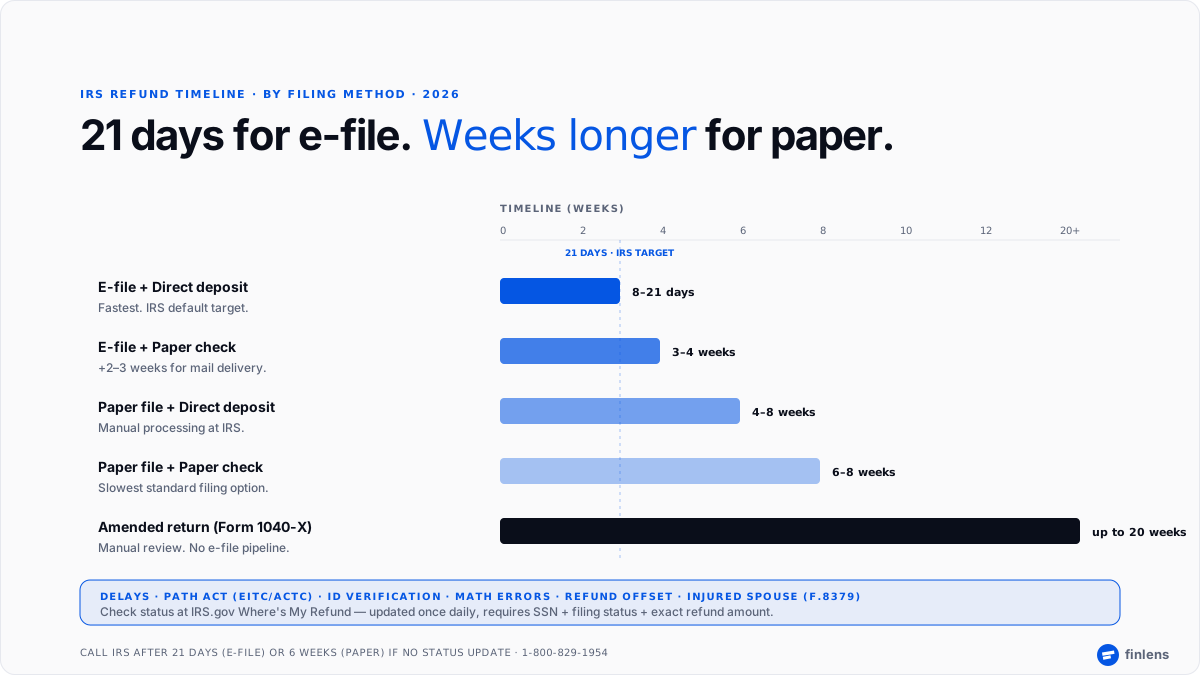
Most federal tax refunds arrive within 21 days of e-filing when taxpayer chooses direct deposit IRS's stated processing goal for standard, error-free returns. Paper returns take substantially longer, typically 6 to 8 weeks. Amended returns (Form 1040-X) can take up to 20 weeks to process.
Those are headline numbers. What actually happens between filing and refund is more nuanced. Here is complete 2026 refund timeline, what causes delays, how to check status, and what "still processing" really means when it drags past 21-day mark.
The IRS refund timeline in 2026
The IRS reports that more than 90% of refunds are issued in less than 21 days for taxpayers who electronically file and select direct deposit. That statistic assumes:
- The return is complete and accurate
- The taxpayer's identity does not require additional verification
- The return does not claim Earned Income Tax Credit (EITC) or Additional Child Tax Credit (ACTC) those are subject to a longer statutory hold
- No IRS backlog issues at specific processing center
Here is practical refund timeline by filing method:
The fastest combination is always e-file plus direct deposit. Paper filing at any stage adds weeks.
What can delay your refund
If your refund is running past 21-day mark, one of following is usually cause.
EITC or ACTC on your return. Under Protecting Americans from Tax Hikes (PATH) Act, IRS is required by law to hold refunds claiming Earned Income Tax Credit or Additional Child Tax Credit until at least February 15 each year. This is a fraud-prevention rule IRS uses extra time to match employer W-2 filings against reported wages. Practically, most PATH-Act-affected refunds land by last week of February or first week of March.
Errors or math discrepancies. If numbers on return do not match IRS records (wages, withholding, dependents), return gets flagged for manual review. This can add 2–8 weeks to processing.
Identity verification. The IRS increasingly requires taxpayers to verify identity through IRS ID Verification if return is flagged by fraud filter. This adds 2–9 weeks depending on how quickly taxpayer responds.
Refund offset. If taxpayer owes past-due federal or state taxes, child support, or defaulted student loans, Treasury Offset Program automatically reduces refund before payment. The taxpayer receives a notice explaining offset.
Injured spouse allocation (Form 8379). When one spouse's tax obligations trigger a refund offset that affects other spouse's share, injured spouse can file Form 8379 to claim their portion. This adds up to 14 weeks to processing.
Amended returns. Form 1040-X returns are processed manually rather than through automated e-file system. Current IRS wait time is up to 20 weeks sometimes longer during high-volume periods.
How to check your refund status
The IRS provides three official ways to check refund status. Do not use third-party apps or SMS services that claim to offer faster updates they are pulling from same IRS API on same schedule.
Where's My Refund tool. Available at IRS.gov/refunds. Updates once per day, usually overnight. Requires three inputs: Social Security Number (or ITIN), filing status, and exact refund amount from return.
IRS2Go mobile app. Same data source as Where's My Refund, mobile-friendly interface. Available for iOS and Android.
Amended return status. Amended returns use a separate tool: "Where's My Amended Return?" at IRS.gov. Status appears 3 weeks after filing and covers up to 3 tax years back.
Status availability:
- E-file: 24 hours after IRS accepts return
- Paper file: 4 weeks after IRS receives mailed return
- Amended: 3 weeks after filing
What "still processing" means
The most common status past 21-day mark is "Return received" or "Still processing." This does not automatically mean something is wrong.
Common reasons for "still processing" beyond 21 days:
- The return is under identity verification review
- The return is subject to PATH Act hold (EITC/ACTC)
- The return contains a schedule that requires manual review (large business losses, Schedule C with high deductions, first-year home office, unusual credits)
- The taxpayer filed late in season and IRS is running a backlog
- The IRS made an adjustment (usually smaller than expected refund) that requires a notice
When to actually call IRS: The IRS asks taxpayers not to call about refund status until:
- More than 21 days have passed since e-filing
- More than 6 weeks have passed since paper filing
- The Where's My Refund tool specifically instructs you to call
The IRS Refund Hotline is 1-800-829-1954. Wait times are longest February through April.
How to get your refund faster next year
Filing choices that reliably shorten refund timing:
- File electronically. Every study on refund timing shows e-file cuts processing by weeks.
- Choose direct deposit. Paper checks add 2–3 weeks over direct deposit.
- File early. Late January to mid-February is sweet spot. Filing in March or April means competing with peak-season backlog.
- Double-check your return. Common errors wrong SSN, wrong filing status, math mistakes, missing signatures on paper returns trigger manual review.
- Match your W-2s exactly. The IRS cross-references reported wages against employer filings. Rounding or transcription errors cause holds.
- Split your refund across accounts (Form 8888) if that fits. This does not slow processing.
For small business owners, clean bookkeeping matters more than most realize. Returns that reconcile cleanly to books (Schedule C, Schedule E, K-1s) rarely trigger deeper audit filters. Returns where deductions look inconsistent with reported income often result of messy bookkeeping and reconciliation during year get flagged more often.
Amended returns: exception to everything above
Amended returns (Form 1040-X) do not follow 21-day timeline. Per IRS, current amended return processing takes up to 20 weeks sometimes longer.
Why amended returns take so long:
- They are processed manually rather than through automated e-file pipeline
- Every amended return requires a human reviewer
- The IRS staffing on amended returns has not scaled with volume
- Amended returns often trigger secondary review (schedule C changes, credit claims, entity elections)
Practical advice: file amended returns only when necessary. If a client discovers an error mid-year, waiting for an amended refund can mean waiting until following spring. This is one reason CPAs pay careful attention to Q4 tax planning catching issues before original return goes out is materially faster than fixing them afterward.
FAQ
How long does IRS take to deposit a refund?
For e-filed returns with direct deposit selected, IRS's stated goal is 21 days or less. About 90% of refunds meet this window. Paper checks add 2–3 weeks.
Why is my refund taking longer than 21 days?
The most common causes are PATH Act hold (EITC/ACTC), identity verification, math or transcription errors, IRS backlog, refund offset, or a return schedule that requires manual review.
How can I speed up my IRS refund?
You cannot speed up a refund already in processing. For next year: e-file, choose direct deposit, file early in season, and double-check return before submitting.
How long does an amended tax return take?
Up to 20 weeks per current IRS processing time. Some amended returns take longer during high-volume periods. Check status at "Where's My Amended Return?" on IRS.gov, available 3 weeks after filing.
What does "Return received" status mean?
The IRS has received and accepted your return but has not yet issued refund. This is normal status for first 1–3 weeks of processing on e-filed returns.
What does "Still processing" mean?
The return is past initial acceptance stage but refund has not been issued. Common when return is under identity verification, subject to PATH Act hold, or flagged for manual review of a specific schedule. Not automatically a problem.
When should I call IRS about my refund?
The IRS asks taxpayers to wait 21 days after e-filing or 6 weeks after paper filing before calling. The Refund Hotline is 1-800-829-1954.
Does state refund follow federal timeline?
No. Each state runs its own refund processing on its own schedule, ranging from 1–3 weeks in fast states to 8–12 weeks in slower ones. Check your state Department of Revenue's refund tracker for status.
Conclusion
21 days is IRS's target for most e-filed refunds with direct deposit. Paper filings and amended returns take substantially longer. If your refund is past that window, delay is almost always one of a small set of causes PATH Act hold, ID verification, math error, offset, or manual review and Where's My Refund at IRS.gov tells you which.
Refund Delayed by Messy Books?
Clean AI-native bookkeeping on QuickBooks and Xero accurate returns, fewer flags, faster refunds. Free for your first entity.

