
IRS Standard Mileage Rate 2026: Business, Medical, and Charitable Rates Explained


The IRS standard mileage rate is a per-mile deduction taxpayers can use in place of tracking every fuel receipt, oil change, and insurance premium separately. The IRS updates rate annually usually in a notice published in December of preceding year. For tax year 2026, standard mileage rates apply to business, medical, moving, and charitable driving, each at a different rate.
This guide covers what 2026 rates are, how standard mileage method works, what miles qualify, how it compares to actual-expense method, and record-keeping IRS actually requires.
The 2026 IRS mileage rates
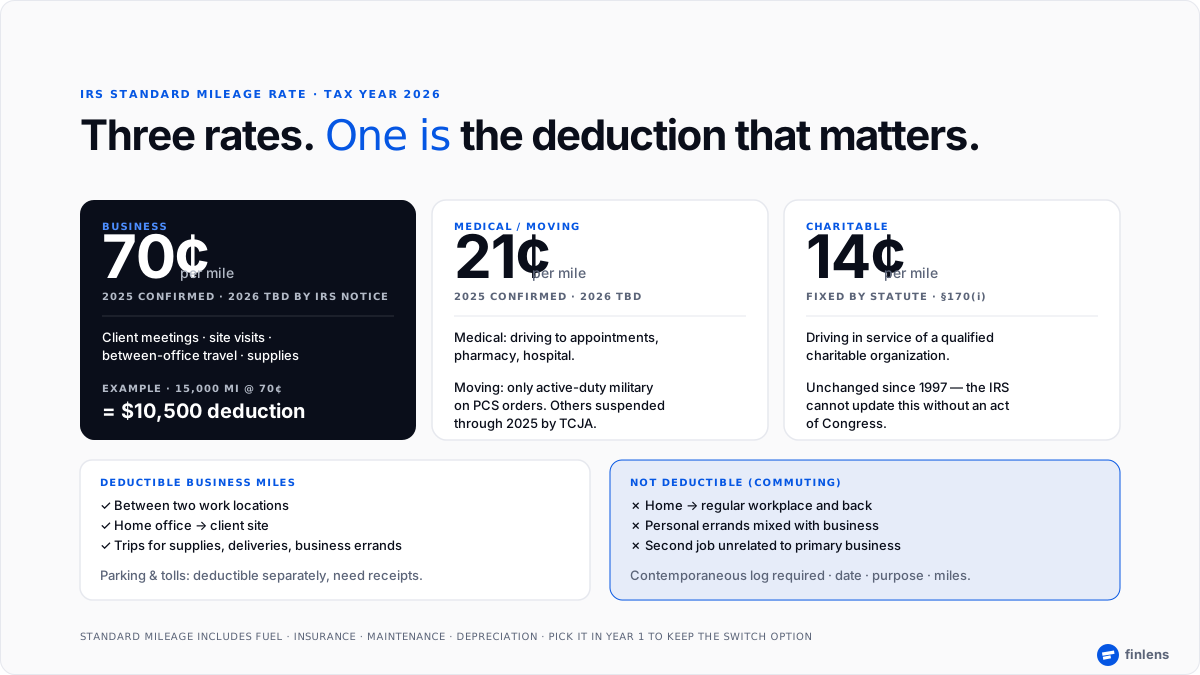
The IRS sets three standard mileage rates each year:
Business rate. The largest deduction and one used by most self-employed filers and small businesses. Applies to any car, van, pickup, or panel truck driven for business.
Medical or moving rate. Applies to driving for medical care and, for active-duty military under permanent-change-of-station orders, moving. The Tax Cuts and Jobs Act suspended moving deduction for most non-military taxpayers through 2025.
Charitable rate. Fixed at 14 cents per mile by Section 170(i) of Internal Revenue Code. Unlike business and medical rates, this one is set by statute and cannot be updated by IRS without an act of Congress. It has not changed since 1997.
Confirm 2026 business and medical rates against official IRS Notice before filing notice number is typically formatted "IRS Notice 2025-XX" and appears on IRS.gov by late December.
How standard mileage rate works
The standard mileage rate is a simple multiplier: business miles driven × rate per mile = deduction.
A self-employed consultant who drives 15,000 business miles at 2025 rate would deduct:
15,000 × $0.70 = $10,500
That deduction covers fuel, oil, insurance, licenses, registration fees, maintenance, tires, and a depreciation component everything associated with operating vehicle. The taxpayer does not need to track individual fuel receipts or repair bills separately.
There are two things standard mileage rate does NOT include:
- Parking fees and tolls incurred during business trips deduct these separately from mileage deduction
- Interest on a car loan (deductible separately for self-employed; not for W-2 employees)
What miles qualify as business miles
Not every mile driven is deductible. The IRS distinguishes between deductible business travel and non-deductible commuting.
Deductible business miles include:
- Driving between two work locations (from a home office to a client meeting, or from office to a job site)
- Driving to a temporary work location outside your metropolitan area
- Driving from a home office to any other work location (home office qualifies as a regular business location if it meets Section 280A tests)
- Trips to buy supplies, drop off packages, meet clients, or attend business events
- Driving to and from a client's office when your home office is your principal place of business
Non-deductible commuting miles include:
- Driving from home to your regular workplace and back
- Personal errands mixed with a business trip (unless primary purpose is business)
- Driving to a second job that is not related to your primary business
The home-office rule matters. Self-employed taxpayers with a qualifying home office can treat home as their principal place of business which means driving from home to a client site is deductible business travel, not commuting.
Standard mileage vs. actual expenses
The IRS allows two methods for deducting vehicle expenses:
Standard mileage method multiply business miles by rate. Simple, no receipts required beyond mileage log, includes depreciation automatically.
Actual expenses method deduct business-use percentage of every actual expense: gas, oil, insurance, registration, repairs, maintenance, tires, and depreciation (via MACRS). Requires receipts and separate depreciation tracking.
Which is better depends on vehicle and driving pattern:
- Standard mileage usually wins for older vehicles, high-mileage drivers, and taxpayers who want simple record-keeping.
- Actual expenses often wins for expensive vehicles with heavy depreciation, taxpayers with low mileage but high fixed costs (luxury insurance, premium gas), and taxpayers whose vehicles are used for business heavily enough that depreciation component under actual expenses exceeds what standard rate credits.
The important rule: if you want option to switch methods later, you must use standard mileage rate in first year vehicle is placed in service. If you use actual expenses in year 1, you are locked into actual expenses for life of that vehicle. This is a common trap for self-employed taxpayers who bought an expensive vehicle and let their tax preparer choose actual expenses without considering switch-back option.
Leased vehicles have a related rule: choosing standard mileage rate in year 1 of a lease locks you into standard mileage for full lease term. Meals and lodging follow a parallel set of federal rates rather than the mileage rate, which is where it pays to know what per diem means for employees and employers.
How to track mileage IRS will accept
The IRS requires a contemporaneous mileage log a record made at or near time of trip. Reconstructing miles from calendar entries six months later is not contemporaneous and does not survive audit.
A compliant mileage log must include, for each business trip:
- Date of trip
- Business purpose (client name, meeting purpose, task)
- Starting location
- Ending location
- Total miles driven
Odometer readings at start and end of each trip are ideal but not required. What IS required is total miles for trip.
Also required:
- Total miles vehicle was driven for year (business + personal + commuting)
- Odometer reading at start and end of year
Modern mileage tracking apps that record automatically via GPS (MileIQ, Everlance, TripLog, and mileage feature inside QuickBooks Self-Employed / Solopreneur) generally meet contemporaneous-log requirement. Manual paper logs still qualify but paper logs need to be filled in at time of trip, not weeks later.
For accountants and CAS firms serving self-employed clients, mileage log is often messiest input in return. Clients who fill in log in April, from memory, produce mileage numbers that raise audit-risk flags. Clean books, driven by automated categorization and disciplined transaction tagging throughout year, produce mileage summaries IRS accepts without follow-up.
The depreciation component
A portion of standard mileage rate is treated as vehicle depreciation. This matters when vehicle is sold or traded in depreciation portion reduces vehicle's basis.
Historical depreciation portions:
- 2024: 30 cents per mile
- 2025: 33 cents per mile
- 2026: TBD (announced in IRS Notice)
If you drive 15,000 business miles in 2025 and use standard mileage rate:
- Deduction: 15,000 × $0.70 = $10,500
- Depreciation portion reducing basis: 15,000 × $0.33 = $4,950
That $4,950 reduces vehicle's basis for gain/loss calculation when sold. Track it if you plan to sell or trade vehicle within ownership period.
Conclusion
The IRS standard mileage rate is simpler of two vehicle-expense methods and covers most self-employed and small-business use cases. Confirm 2026 rate against IRS Notice before filing. Track miles contemporaneously log matters more than any receipt.
FAQ
What is IRS mileage rate for 2026?
The 2026 business standard mileage rate is set by IRS Notice published December 2025. The charitable rate is 14 cents per mile, unchanged since 1997 (set by statute). Confirm against official IRS Notice before filing.
Can I deduct commuting miles?
No. Driving from home to your regular workplace and back is non-deductible commuting, regardless of whether you use standard mileage rate or actual expenses. If you have a qualifying home office, driving from home to a client site is business travel and deductible.
Do I need to keep gas receipts if I use standard mileage rate?
No. The standard mileage rate covers gas, oil, insurance, maintenance, and depreciation together. You need mileage log not receipts. Parking fees and tolls are deducted separately and do require receipts.
Can I switch between standard mileage and actual expenses each year?
Only if you used standard mileage rate in first year vehicle was placed in service. If you used actual expenses in year 1, you are locked into actual expenses for life of vehicle. This is a major decision to make in year 1 of vehicle ownership.
What if I forgot to keep a mileage log?
Reconstructed logs made after fact from calendar entries, appointment history, and GPS records are sometimes accepted, but they are weakest form of documentation and often trigger IRS follow-up. Start a contemporaneous log going forward do not attempt to reconstruct a full year of missed miles.
Does IRS mileage rate apply to leased vehicles?
Yes, but with a caveat: if you use standard mileage rate in year 1 of a lease, you must use it for entire lease term. There is no option to switch to actual expenses mid-lease.
Where do I deduct mileage on my tax return?
Self-employed filers deduct business mileage on Schedule C (line 9, Car and Truck Expenses). Employees generally cannot deduct unreimbursed mileage (Tax Cuts and Jobs Act eliminated that deduction through 2025). Reservists, qualified performing artists, and certain government officials can still deduct unreimbursed employee mileage on Form 2106.
How is charitable mileage different?
Charitable mileage is fixed at 14 cents per mile by federal statute and has not changed since 1997. It applies to driving in service of a qualified charitable organization. You cannot use higher business or medical rate for charitable driving.

