
How Long Does an IRS Audit Take? (Correspondence, Office, and Field Audit Timelines)


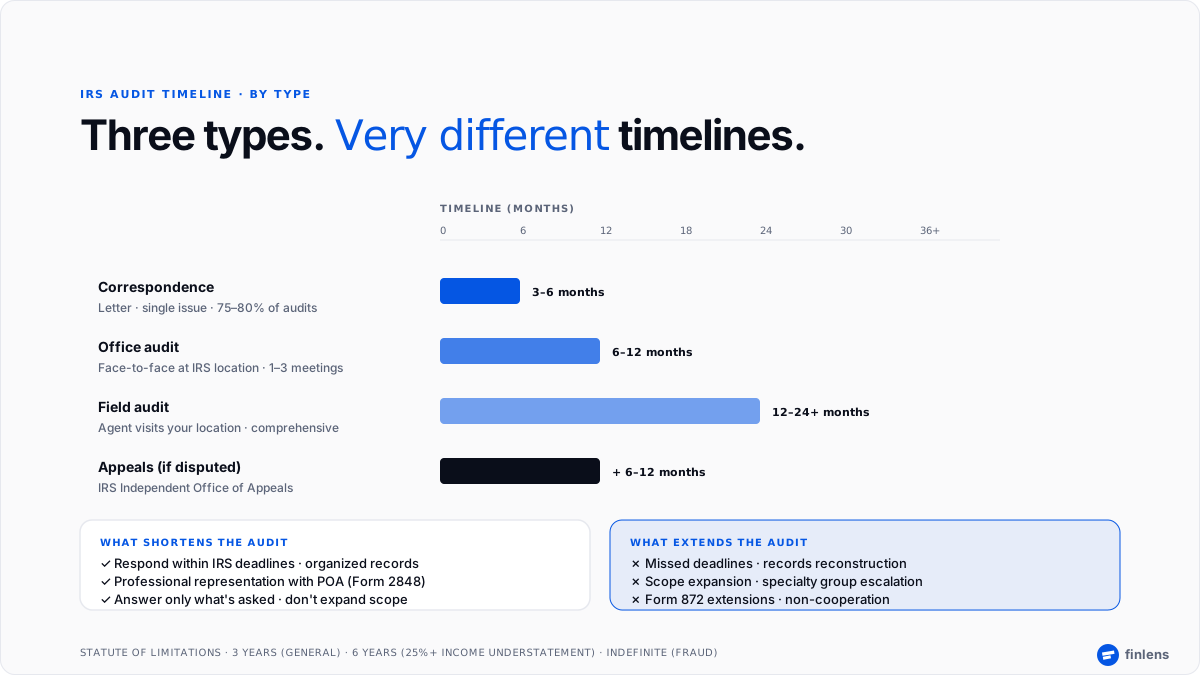
IRS audit length depends on audit type. Correspondence audits mail-based kind that make up most IRS examinations typically resolve in 3–6 months. Office audits (at an IRS location) generally run 6–12 months. Field audits (at your home, business, or accountant's office) usually take 12–24 months, and complex field audits can extend past 2 years. Then, if you appeal, add another 6–12 months.
The specific timing depends on type of return, issues raised, how quickly you respond, and auditor's caseload. This guide covers each audit type, audit lifecycle, and what actually shortens or extends process.
The 3 types of IRS audits and their typical timelines
Correspondence audit (letter audit). Approximately 75–80% of all IRS examinations are correspondence audits, according to IRS audit guidance. The IRS sends a letter (usually CP2000 or a specific audit notice) asking for documentation supporting a specific item on your return a deduction, credit, or income entry. You respond by mail with copies of receipts, contracts, or explanations.
Typical timeline: 3–6 months from initial letter to close-out, assuming timely responses. Simple corrections can close in as little as 30–60 days. Delayed responses can stretch audit to 12+ months.
Office audit (desk audit). The IRS asks you to come to a local IRS office, usually with your accountant, for a face-to-face meeting. The auditor reviews specific issues in person. Common for moderately complex individual returns and small business returns.
Typical timeline: 6–12 months. Usually involves 1–3 in-person meetings plus written follow-ups.
Field audit. The IRS sends an agent to your business, home, or accountant's office. Field audits are reserved for complex individual returns, businesses (especially those with employees, inventory, or complex accounting), and high-income taxpayers. The audit is more comprehensive agent typically reviews general ledger, source documents, and may examine multiple tax years.
Typical timeline: 12–24 months for business field audits. Complex situations multiple entities, international operations, disputed valuations can extend past 2 years.
What determines actual timeline
Within each audit type, several factors compress or extend timeline:
Issue complexity. A single-item correspondence audit on a charitable deduction resolves in weeks. A field audit examining transfer pricing across multiple entities can take years.
Records completeness. Taxpayers with complete, organized tax records resolve audits materially faster. Records that require reconstruction from bank statements, credit card records, contemporaneous notes extend audit by months.
Taxpayer responsiveness. The IRS sets response deadlines (typically 30 days). Missed deadlines require follow-up letters and delay auditor's work.
Auditor caseload. IRS auditor staffing has fluctuated significantly. When IRS is understaffed (particularly field-audit division), individual audits take longer because agent is juggling more cases.
Whether professional representation is engaged. Taxpayers with CPA or EA representation typically move through audit stages faster because representative knows process and answers correctly first time.
Whether case escalates. Disagreements that require supervisor review, appeals, or specialty referrals (international tax, transfer pricing) each add time.
The audit lifecycle stages
Every IRS audit follows same general stages, though timing at each stage varies:
1. Notification. IRS sends initial letter identifying audit type and requesting information. Typically 30 days to respond.
2. Initial document exchange. You (or your representative) provide requested documents. Auditor reviews. This stage can involve multiple rounds of information requests over 2–6 months.
3. Fieldwork or examination. For field audits, agent visits your location. For office audits, meetings at IRS office. For correspondence audits, this stage happens by mail. Usually longest stage.
4. Findings issuance. Auditor issues Form 4549 (Income Tax Examination Changes) or similar showing proposed adjustments and additional tax owed.
5. Response and negotiation. You accept findings, negotiate specific adjustments, or reject and request appeals.
6. Close-out. If accepted, you sign Form 870 or similar, pay any tax due, and audit closes. If not, escalation to Appeals or Tax Court.
The appeals process add 6–12 months
If you disagree with audit findings, you can request an appeal with IRS Independent Office of Appeals. The appeals officer is separate from auditor and reviews case fresh.
Typical appeals timeline: 6–12 months from filing to resolution. Complex cases with valuation disputes or legal issues can extend longer.
If Appeals doesn't resolve case, next steps are Tax Court, District Court, or Court of Federal Claims each with its own multi-year timelines.
How to shorten your audit
Several practices reliably compress audit timing:
1. Respond to every IRS letter within deadline. Missed deadlines automatically extend audit usually by 30+ days per miss.
2. Provide organized documentation. Auditors work through cases with clean records faster. This is one reason clean monthly reconciliation and automated bookkeeping throughout year pays off it means audit-ready records without a reconstruction project.
3. Engage professional representation. A CPA or EA who has handled audits before saves months of process navigation. The Taxpayer Advocate Service's help page can also assist when an audit is genuinely stuck.
4. Answer only what's asked. Volunteering additional information extra tax years, extra topics, unrelated items invites auditor to expand audit scope. Answer specifically and don't offer more.
5. Get a Power of Attorney (Form 2848) on file. This authorizes your representative to communicate directly with IRS. Without POA, everything routes through you, slowing process.
6. If findings are wrong, dispute them at Appeals, not at audit stage. Some audit disputes are better handled by escalating to Appeals rather than arguing with original auditor. Appeals officers have more authority to negotiate.
What delays your audit
Missed deadlines. Failure to respond within IRS timeframes triggers 30-day extensions, follow-up letters, and eventually notices of deficiency.
Requesting extensions repeatedly. Each extension is understood by auditor but consumes calendar. Two or three extensions can add 3–6 months.
Records reconstruction. If original records were lost, reconstructing them from bank statements takes weeks of your accountant's time.
Scope expansion. If initial correspondence audit uncovers issues that lead IRS to open additional tax years, audit becomes materially longer.
Escalation to specialty groups. International tax, transfer pricing, and offshore account issues route to specialty examiners with their own queues.
Non-cooperation. Refusing to provide documents can force IRS to issue summonses a court-ordered document production that adds months.
What "statute of limitations" means for audit timing
The IRS generally has 3 years from filing to complete an audit and assess additional tax (IRC §6501). During this 3-year window, audit must be substantively complete or IRS may need to request an extension via Form 872 (Consent to Extend Time to Assess Tax).
If an audit is approaching statute expiration date and not complete, IRS will typically ask you to sign Form 872 extending statute by 6 months or a year. Refusing to sign forces IRS to close audit with whatever information is available often producing rushed adverse findings.
Extensions to 6 years apply for substantial income understatement (25%+ omitted). No statute applies for fraud or unfiled returns. See our guide on how long to keep business tax records for statute breakdown.
Conclusion
Correspondence: 3–6 months. Office: 6–12. Field: 12–24+. Appeals: add 6–12 months. The best way to compress any audit is to respond on time, provide organized documentation, and engage professional representation. Records reconstruction is what turns a 6-month audit into a 12-month one.
FAQ
How long does an IRS audit take from start to finish?
Correspondence audits typically 3–6 months. Office audits 6–12 months. Field audits 12–24 months, longer for complex cases. Appeals adds another 6–12 months if pursued.
What's fastest type of IRS audit?
Correspondence audits are fastest usually mail-based on a single specific issue. Simple ones can resolve in 30–60 days. Most take 3–6 months.
How long does a business IRS audit take?
Business audits are usually field audits, which typically run 12–24 months. Complex businesses with multiple entities, employees, inventory, or international operations can take longer.
Can I speed up my IRS audit?
Yes respond within IRS deadlines, provide complete organized documentation, engage professional representation with Power of Attorney filed, and answer only what's asked (don't expand scope).
How long does IRS appeals process take?
Typically 6–12 months from filing appeal to resolution. Complex cases with valuation or legal disputes can take longer. Cases that don't settle at Appeals move to Tax Court, adding years.
What is IRS statute of limitations for audits?
Generally 3 years from return filing date, extended to 6 years for substantial income understatement (25%+ omitted). Indefinite for fraud or unfiled returns. The IRS often asks taxpayers to sign Form 872 extending statute during active audits.
Do IRS audits always result in additional tax owed?
No. Roughly 10–15% of correspondence audits result in additional refunds (in favor of taxpayer). Roughly 15–20% result in no change. The remainder result in adjustments median business audit produces additional tax owed.
What if I disagree with audit findings?
Request Appeals via IRS Independent Office of Appeals. Appeals reviews case fresh with independent authority. If Appeals doesn't resolve it, next steps are Tax Court, District Court, or Court of Federal Claims.

