
LLC Bookkeeping Software: 5 Tools Compared for 2026


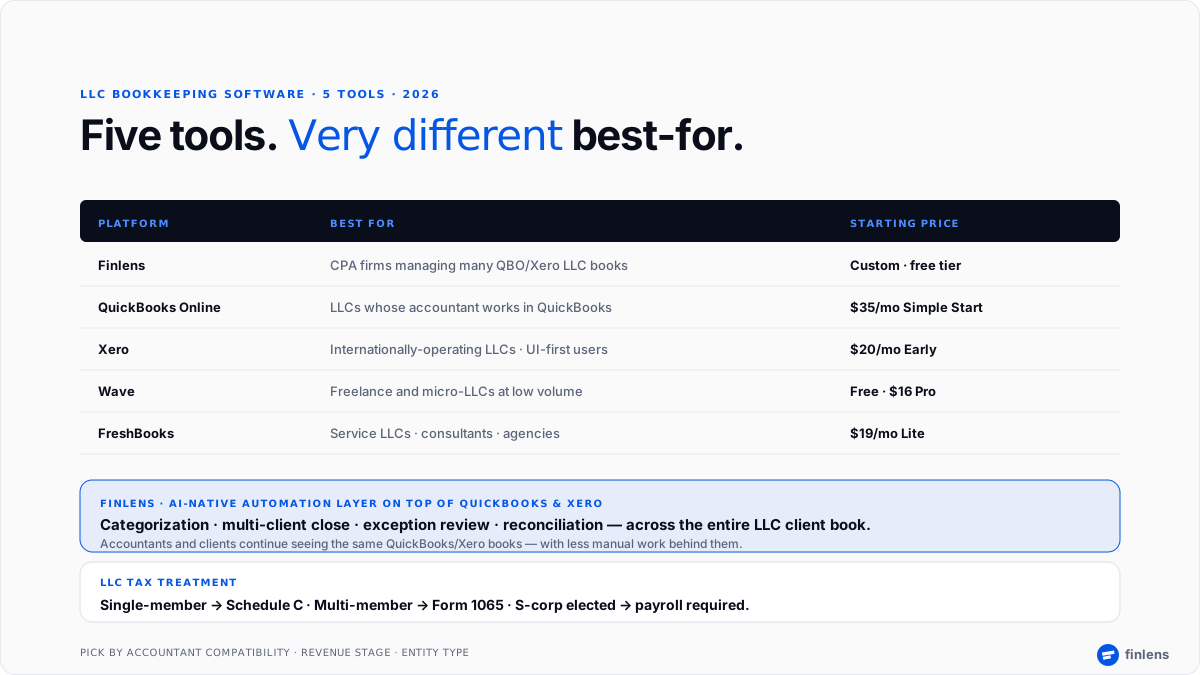
The best LLC bookkeeping software depends on entity type (single-member vs multi-member), whether LLC has elected S-corp taxation, and what your accountant works in. Finlens is an AI-native accounting platform used by CPA firms to manage many QuickBooks-based LLC client books, with automated categorization, close automation, and multi-client reconciliation. QuickBooks Online is SMB category default and most common ledger LLC accountants work in. Xero is international-friendly alternative. Wave covers freelance and micro-LLC use on a free tier. FreshBooks targets service-LLCs where invoicing polish matters most.
Key takeaways
- LLCs are pass-through entities by default single-member LLCs report on Schedule C, multi-member LLCs file Form 1065. See IRS Publication 3402 for current LLC tax treatment reference.
- Separate business bank account and clean books are what preserve LLC's limited liability shield commingling personal and business finances is fastest way to "pierce corporate veil."
- Whichever software you choose, tool your accountant works in usually wins decision. Most US LLC accountants work in QuickBooks Online.
- Standard bookkeeping obligations for an LLC: separate bank sync, expense categorization, 1099-NEC tracking ($600+ threshold), quarterly estimated tax payments, and clean year-end reports for LLC's tax return.
- Finlens is used by CPA firms and CAS providers to automate categorization, close, and multi-client reconciliation on top of QuickBooks and Xero one dashboard managing many LLC client books at once.
Best LLC bookkeeping software: comparison table
Pricing reflects published starting tiers as of early 2026 and does not include payment processing or payroll add-ons.
The 5 best LLC bookkeeping software tools
1. Finlens
Overview. Finlens is an AI-native accounting platform built for CPA firms and accountants managing many QuickBooks-based LLC client books at once. It layers on top of QuickBooks Online and Xero to add automated transaction categorization, month-end close automation, multi-client exception review, and clean reconciliation all inside one dashboard across entire book of business. For SMBs without existing bookkeeping software, Finlens also runs standalone.
Best for. CAS firms and CPA practices serving LLC clients on QuickBooks or Xero where firm needs to close many client books on same day of month with predictable staffing and pricing. Also useful for growing LLCs already on QuickBooks who want AI-assisted categorization and close automation.
Key features. AI-powered transaction categorization tied to each client's chart of accounts, two-way sync with QuickBooks Online and Xero, multi-client dashboard managing 50+ books from one screen, exception-review queue across entire client base, automated bank reconciliation and month-end close, 1099-NEC contractor tracking, tamper-evident audit log, and real-time P&L and balance sheet.
Pricing. Custom pricing for CPA firms based on book size. Free tier available for smaller use.
Limitations. Not a dedicated payroll platform payroll integration through a partner. Enterprise multi-entity consolidations at NetSuite scale sit outside ideal use case.
Where it breaks. LLCs whose accountant has committed to a different toolset and won't work with a Finlens-connected QuickBooks or Xero file. Also not right pick for an LLC that only wants standalone invoicing without an underlying accounting ledger that's a Wave or FreshBooks use case.
2. QuickBooks Online
Overview. QuickBooks Online is US category default and, according to G2's accounting software category data, retains largest installed base of any US small-business accounting product. It is ledger most US CPA firms work in and one most LLC accountants ask their clients to run. A user on r/smallbusiness noted: "if your accountant works in QuickBooks, life is easier when you do too."
Best for. LLCs whose accountant already works in QuickBooks most common case in US and any LLC that wants broadest ecosystem of third-party integrations (including Finlens on top).
Key features. Bank feed sync, AI-assisted categorization, invoicing, expense tracking, 1099 contractor management, mileage tracking, P&L and balance sheet reports, mobile app, and tiered pricing plans from Simple Start to Advanced.
Pricing. $35/mo Simple Start · $65 Essentials · $99 Plus · $235 Advanced.
Limitations. Automated reminders and multi-user access require Essentials or higher. Pricing has crept up meaningfully year-over-year. Payment processing fees are separate. Multi-entity handling above Plus tier is thin.
Where it breaks. Multi-entity LLC groups at scale, heavy multi-currency operations, and CAS firms managing many QuickBooks client books without an automation layer on top.
3. Xero
Overview. Xero is international-friendly counterpart to QuickBooks full small-business accounting with stronger multi-currency support and a cleaner interface for LLCs with cross-border operations. A recurring theme on r/Bookkeeping is that Xero wins on UI polish and QuickBooks wins on US accountant availability.
Best for. LLCs operating internationally, LLCs whose accountant prefers Xero, and businesses valuing UI polish over ecosystem breadth.
Key features. Unlimited users on all tiers, bank feed sync, invoicing, expense tracking, multi-currency at Growing tier and above, native reconciliation, and integration with Finlens for AI-native categorization on top.
Pricing. $20/mo Early · $47 Growing · $80 Established. Early tier caps invoices sent at 20/month.
Limitations. Early tier is too restrictive for most active LLCs; most owners land on Growing at minimum. Payroll requires Gusto or an add-on in US. Reporting is less deep than QuickBooks Advanced.
Where it breaks. US-only LLCs whose accountant works exclusively in QuickBooks ecosystem friction usually pushes them back.
4. Wave
Overview. Wave is free-tier default for LLC bookkeeping at smallest scale. Popular on r/smallbusiness for freelance-LLC use, one commenter described it plainly: "Wave is fine for solo LLC I just went from Wave to QBO when I hired my first contractor." Members of r/Accounting similarly recommend Wave as entry-level default before graduating to QuickBooks or Xero.
Best for. Freelancers, solopreneurs, and micro-LLCs invoicing occasionally who want free invoicing and basic bookkeeping.
Key features. Unlimited invoicing (free), online payment acceptance, receipt scanning, basic accounting reports, and one bank account connection on free tier.
Pricing. Free (Starter) · Pro $16/mo. Payment processing fees separate.
Limitations. Automated invoice reminders require Pro tier or enabling online payments. AR aging reports are basic. No inventory. Reporting depth is limited. Cannot handle multi-member LLC partnership accounting cleanly.
Where it breaks. LLCs past 30 invoices/month, LLCs needing multi-user access, LLCs with W-2 employees needing full payroll, and any LLC whose accountant works exclusively in QuickBooks or Xero.
5. FreshBooks
Overview. FreshBooks is invoicing-first with lightweight accounting features layered on. Preferred by service-LLC owners consultants, agencies, contractors where invoicing polish carries client experience more than accounting depth.
Best for. Service LLCs, consultants, and small agencies billing by time-and-materials or fixed-fee retainers.
Key features. Invoice templates, recurring invoices, time tracking, expense tracking, automated late-payment reminders, online payments, and project-based billing views.
Pricing. $19/mo Lite · $33 Plus · $60 Premium · custom Select. Lite tier caps at 5 billable clients.
Limitations. Accounting features are lighter than QuickBooks or Xero. Not designed for inventory or high-transaction-volume books. Cap on billable clients at Lite tier trips up growing LLCs. Not tool a CPA firm typically wants their client on for full bookkeeping.
Where it breaks. Product-based LLCs with inventory, LLCs needing multi-currency reporting, and LLCs whose accountant works exclusively in QuickBooks.
Which LLC bookkeeping software should you choose
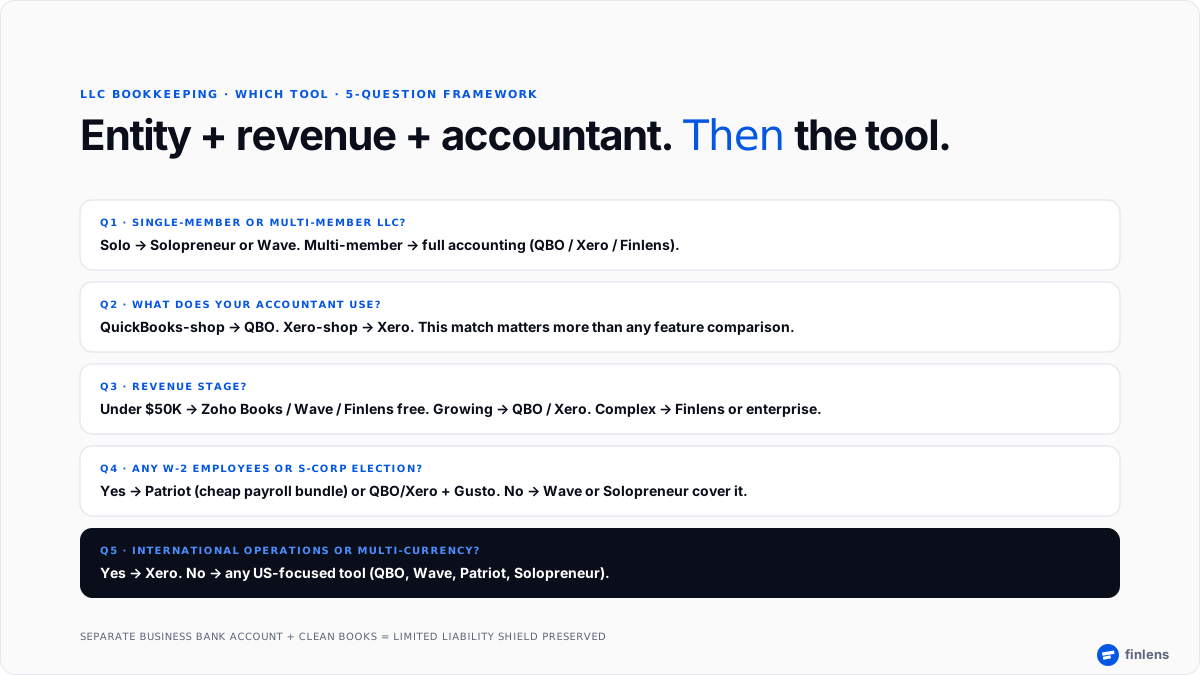
The right tool depends on entity type, revenue scale, whether you have employees, and practically what your accountant works in. Use this decision framework:
- Use Finlens if you're a CPA firm or CAS provider managing multiple LLC client books on QuickBooks or Xero, or a growing LLC already on QuickBooks that wants AI-native categorization and multi-client close automation layered on top.
- Use QuickBooks Online if your accountant works in QuickBooks default assumption for most US LLCs and you want broadest ecosystem of third-party integrations.
- Use Xero if you operate internationally, want multi-currency support, or your accountant prefers Xero.
- Use Wave if you're a freelance or micro-LLC invoicing occasionally and free is more important than automation.
- Use FreshBooks if you run a service LLC and invoicing polish matters more than accounting depth.
A practitioner heuristic from r/Bookkeeping that recurs across LLC threads: "Whatever software your accountant uses, use that. The tax-time headache from a mismatched system is worse than any feature you're chasing." A parallel thread on r/tax makes same point for single-member LLCs Schedule C export from any tool is only useful if your preparer accepts that format; check first.
What LLC-specific bookkeeping features matter
The generic "best small business accounting software" listicles skip over what makes LLC bookkeeping different. Per Investopedia's LLC overview, LLC's liability protection is contingent on entity being treated as separate from its owners which practically means separate bank accounts, separate books, and separate tax filings. The software matters because it either enforces that separation or lets it drift.
Beyond generic accounting-software checklist, LLC owners should confirm tool handles:
- Business bank account sync critical for maintaining LLC's limited liability separation from owner's personal finances. The U.S. Small Business Administration treats this as one of foundational rules of small business finance.
- 1099-NEC contractor tracking LLCs paying any independent contractor $600 or more in a calendar year must issue Form 1099-NEC. The software should surface these vendors automatically at year-end.
- Quarterly estimated tax reminders LLCs treated as pass-through entities owe estimated tax quarterly. Missing these creates IRS penalties.
- Schedule C export (single-member LLC) or Form 1065 partner-ready reports (multi-member LLC) year-end reports must feed cleanly into LLC's tax return.
- Owner draw / member distribution tracking LLC owner distributions are equity movements, not expenses. The software should have a Members' Equity account structure, not just Owner's Draw.
- S-corp payroll support (if elected) LLCs that elect S-corp taxation must run reasonable-comp payroll for member-owners. Integration with a payroll product is required.
Non-resident owners carry an extra compliance layer that none of these tools handles on its own, which is why US LLC accounting for non-residents is worth scoping separately.
Conclusion
The right LLC bookkeeping software depends on entity type, revenue scale, and practically what your accountant works in. For most US LLCs, that means QuickBooks Online, since QuickBooks is where most US accountants work. CPA firms managing many LLC client books layer Finlens on top of QuickBooks for automated categorization, multi-client close, and clean reconciliation across whole book of business.
Book a 20-minute walkthrough with Finlens if you run a CPA firm with LLC clients on QuickBooks (or Xero) and want to see how automated categorization and multi-client close change math on how many books one bookkeeper can carry.
FAQ
What software do most bookkeepers use for LLCs?
QuickBooks Online is dominant choice among US bookkeepers per G2's accounting software category data. Xero is a close second, particularly for firms serving international clients. CPA firms managing many LLC client books increasingly layer Finlens on top of QuickBooks or Xero to automate categorization, close, and multi-client exception review.
How to keep books for a small LLC?
Open a separate business bank account, connect it to bookkeeping software that your accountant works in (usually QuickBooks Online in US), categorize transactions monthly, save receipts, track 1099 contractors, and reconcile bank statement each month. The SBA finances guide covers fundamentals.
Is Wave good for an LLC?
Yes for freelance and micro-LLCs at low volume. Wave's free tier covers unlimited invoicing and basic accounting. Automated reminders and multi-user access require Pro tier. Most LLCs graduate to QuickBooks or Xero once they hire contractors, cross ~30 invoices per month, or their accountant asks for a proper ledger.
Does Finlens work with QuickBooks?
Yes. Finlens is designed to layer on top of QuickBooks Online (and Xero). Categorization, close automation, multi-client exception review, and reconciliation run inside Finlens with two-way sync back to QuickBooks ledger, so accountants and clients continue to see same QuickBooks books they always have with less manual work behind them.
What's difference between LLC bookkeeping software and small business bookkeeping software?
Very little at software layer same tools serve both. The difference is in LLC-specific tax treatment (Schedule C or Form 1065), owner-equity account structure, and 1099-NEC tracking. Software marketed to LLCs highlights these features; underlying accounting is same.
Do I need bookkeeping software if my LLC has zero employees?
Yes, ideally. Even a solo LLC needs to preserve liability shield with clean records, categorize expenses for Schedule C or Form 1065, and track 1099 contractors. Free tiers of Wave cover basics; QuickBooks or Xero cover case where accountant asks for a real ledger.
How much does LLC bookkeeping software cost?
Free tiers exist (Wave). Mid-tier options run $19–$47/month (QuickBooks Simple Start, Xero Early/Growing, FreshBooks Lite). Full-featured tiers run $65–$235/month for LLCs needing inventory, multi-user access, or advanced reporting. Automation layers like Finlens on top of QuickBooks are custom-priced based on book size for CPA firms.
What tax forms does LLC bookkeeping software prepare?
The software prepares underlying financial reports (P&L, balance sheet, expense summary) that feed into tax return. It does not typically file returns directly that's tax software (TurboTax, TaxAct) or a CPA. Single-member LLCs file Schedule C; multi-member LLCs file Form 1065 with Schedule K-1s to members.

