
Sales Tax Nexus: What It Is and How It Works


Sales tax nexus is legal connection between a business and a state that requires a business to register, collect sales tax on in-state sales, and remit that tax to the state's tax authority. Nexus is created when a business maintains a physical presence in a state, exceeds an economic threshold in dollars or transactions, uses in-state affiliates, or sells through a marketplace.
Before 2018 U.S. Supreme Court decision in South Dakota v. Wayfair, Inc., states could only require sales tax collection from businesses with physical presence. After Wayfair, states can require collection based on economic activity alone; a business no longer has to set foot in state to owe sales tax there. Every state with a general sales tax has since enacted economic nexus rules.
This guide covers what nexus means, four types that can trigger a sales tax obligation, how to check whether you've crossed line, and what to do if you have.
What is sales tax nexus
Nexus determines where your business owes sales tax. It doesn't determine how much state's rate and product's taxability handle that. Nexus answers a more basic question: does state have legal authority to require you to collect sales tax on sales into state?
Every state defines nexus for itself, but framework is consistent. Once nexus is established, business must:
- Register with state's tax authority usually Department of Revenue.
- Collect correct combined state and local sales tax on each in-state sale, based on ship-to location.
- File periodic returns. Filing frequency (monthly, quarterly, or annually) depends on volume.
- Remit collected tax by filing deadline.
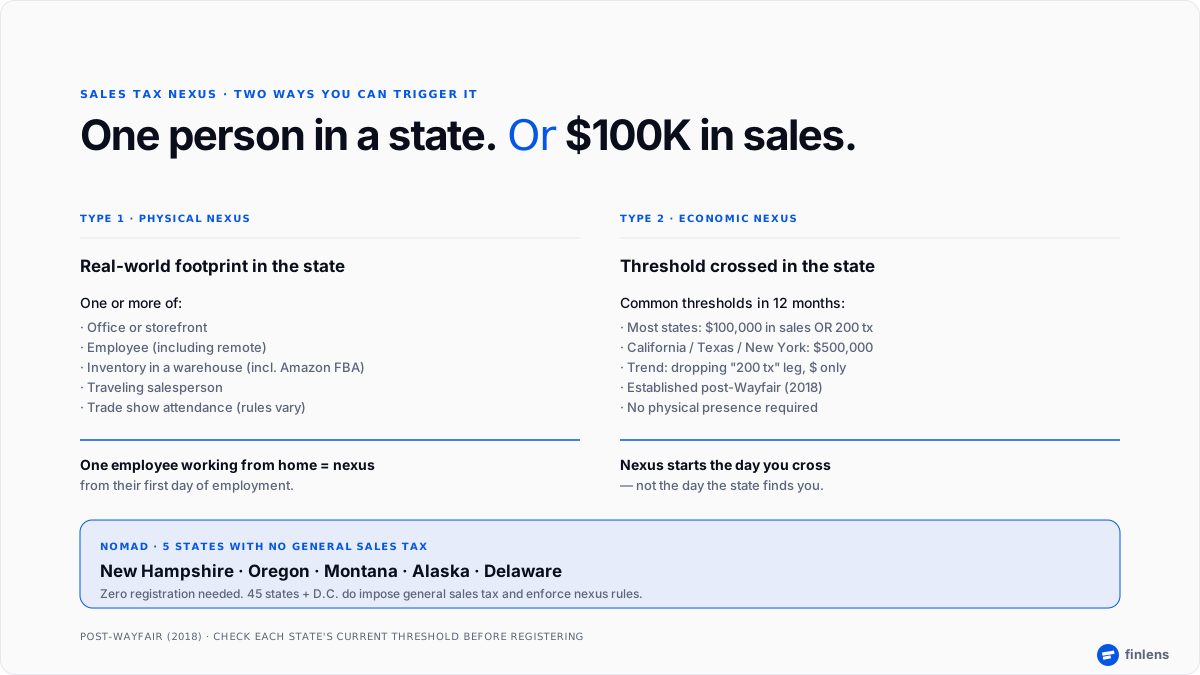
Forty-five states plus D.C. impose a general sales tax. Five states New Hampshire, Oregon, Montana, Alaska, and Delaware do not, and no nexus analysis is needed for those. Alaska has local sales taxes in some municipalities but no statewide tax.
Getting nexus wrong is expensive. A business that should have been collecting and wasn't owes back tax, interest, and penalties for entire period nexus existed. Most states look back three to eight years in a routine audit. A business doing $200,000 a year in a state without collecting can face $30,000 to $50,000 in back exposure once tax, interest, and penalties stack.
Types of sales tax nexus
Four types of nexus show up most often. A single business can have more than one type in the same state, and each type is enough on its own to create obligation.
Physical nexus
Physical nexus is a traditional standard. A business has a physical nexus when it has a real-world footprint in state property, personnel, or inventory. The activities that create physical nexus:
- Property. An owned or leased office, retail store, warehouse, or showroom.
- Employees. Even one employee working in the state, including remote workers. The employee doesn't need to be in sales. A customer support rep or engineer working from a home office in Georgia creates physical nexus in Georgia from their first day.
- Inventory. Products stored in state, including inventory in third-party fulfillment centers. Amazon FBA is a common trigger: Amazon moves seller inventory across its own network, and inventory sitting in a Kentucky warehouse creates Kentucky nexus even if seller has never been there.
- Traveling personnel. Salespeople, installers, technicians, or executives conducting business in state on a recurring basis.
- Trade shows. In many states, attending a trade show creates temporary nexus, especially if orders are taken on-site.
Physical presence was only route to nexus before 2018. Since Wayfair, it's one of several.
Economic nexus
Economic nexus is triggered when a business's sales into a state cross a dollar or transaction-count threshold in a defined measurement period, regardless of whether business has any physical presence in state.
The template that most states adopted comes directly from Wayfair case: $100,000 in gross sales into state, or 200 separate transactions, in current or prior calendar year. Both prongs are disjunctive either one is enough. A business that crosses either $100,000 in sales OR 200 transactions is over line.
Larger-economy states use higher thresholds:
- California, Texas, and New York: $500,000 in gross sales. No transaction-count prong.
- Tennessee: $100,000 in sales.
- Kansas: $100,000 in sales.
A visible trend is dropping 200-transaction prong and keeping only dollar threshold. The 200-transaction rule created compliance burden for hobby-scale sellers on Etsy or eBay who didn't come close to $100,000 in sales but did have 200 low-dollar orders. Alabama, Iowa, Massachusetts, Michigan, North Dakota, South Dakota, and Wisconsin have all dropped it.
Nexus is established day threshold is crossed not day state finds you. If your California sales cross $500,000 on July 12, you have California economic nexus starting July 12. You are expected to register, collect, and remit going forward from that date.
Marketplace nexus
Marketplace nexus came with marketplace facilitator laws, now on books in every sales-tax state. When a seller lists on a "marketplace" Amazon, Etsy, eBay, Walmart, Target Plus marketplace is treated as seller for sales tax purposes on those sales. The marketplace registers, collects, and remits on seller's behalf.
For a seller who does business exclusively through a covered marketplace, this dramatically reduces compliance burden.
Two caveats:
- Reporting registrations. A handful of states still require sellers to register purely to report sales even when marketplace collects.
- Direct sales aren't covered. If a seller also runs a direct Shopify or WooCommerce store off-marketplace, those direct sales are on seller they trigger economic nexus based on seller's own activity.
Marketplace facilitator is single biggest simplification for small e-commerce sellers post-Wayfair. It's why a hobby Etsy seller with buyers in 30 states doesn't need to register in 30 Etsy does it.
Affiliate and click-through nexus
Affiliate nexus is created when a business has a relationship with another business that has a physical presence in a state a subsidiary, common ownership, or common branding. If affiliated business has physical presence in state, primary business can be pulled into nexus there.
Click-through nexus is triggered when a business pays a commission or referral fee to a person or website in a state for driving sales. If referral partner has physical presence, some states extend nexus to business paying commission.
Both were more common before economic nexus rules took over. Most states have folded these provisions into economic nexus laws or left them on books but rarely enforced. For a modern digital business, economic and marketplace nexus are almost always deciding factors.
How to know if you have nexus
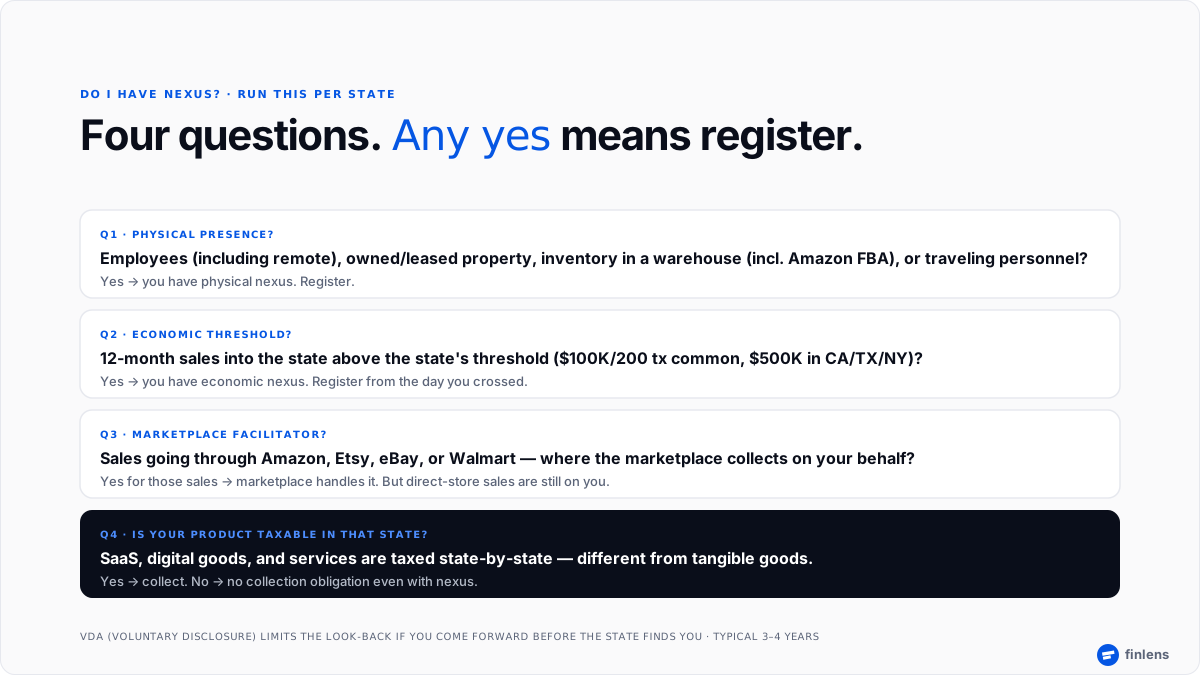
The most reliable way to determine nexus is to work through four questions state-by-state.
Question 1 Is there physical presence? Do you have property, employees, inventory, or recurring personnel in state? Any of these typically creates physical nexus. Common examples that get missed: a remote employee hired during post-2020 shift to distributed work, or Amazon FBA inventory that Amazon moved into a state without notifying you.
Question 2 Has economic threshold been crossed? Pull last 12 months of sales into state and compare to state's current threshold. $100,000 in sales or 200 transactions is most common. $500,000 in California, Texas, and New York. If crossed, nexus was established day threshold was crossed.
Question 3 Does a marketplace facilitator law cover channel? If sales flow through Amazon, Etsy, eBay, or Walmart, marketplace is collecting on your behalf. Sales through your own direct site are not covered.
Question 4 Is product taxable in state? Sales tax rules treat physical goods, digital goods, software-as-a-service, and services differently, and taxability is state-by-state. A SaaS product taxable in New York may be exempt in California. Nexus creates obligation to register; taxability determines whether actual sales need tax collected.
If Question 1 or Question 2 is yes, Question 3 doesn't fully cover your channel, and Question 4 says product is taxable you have nexus and need to register.
A worked example
Imagine you run a Shopify store from your home office in Austin, Texas. You have no employees or inventory outside Texas. Over past 12 months you sold $130,000 into California and $115,000 into Illinois.
- California threshold is $500,000. Your $130,000 doesn't cross it. No California economic nexus (yet).
- Illinois threshold is $100,000 or 200 transactions. Your $115,000 crosses dollar threshold. You have Illinois economic nexus starting day threshold was crossed.
You register with Illinois Department of Revenue, collect Illinois sales tax on future Illinois orders, and file returns.
Now suppose you hire a customer support rep in Denver, Colorado. That single employee gives you physical nexus in Colorado from their first day of work regardless of your sales volume there. Register in Colorado too.
Common scenarios that complicate nexus
Three situations catch businesses off-guard:
- Amazon FBA inventory movement. Amazon moves seller inventory across its fulfillment network without seller approval. A seller with no intent to store inventory in a particular state can find inventory sitting there, creating physical nexus.
- Remote employees. One remote hire in a new state creates physical nexus from day one, even if employee isn't in sales and even if you never had customers there.
- Digital goods and SaaS taxability. Nexus creates registration obligation. Whether you actually need to collect on a specific transaction depends on whether your product is taxable under destination state's rules and SaaS taxability varies widely (taxable in Texas, exempt in California, partially taxable in New York).
What to do if you crossed threshold
Once you determine you have nexus in a state and haven't been registered, three paths exist:
- Register going forward. Most states will let you register and start collecting from a specified prospective date. But you still owe back tax for period you had nexus and weren't collecting. States will bill you for it sometimes with interest and penalties on top.
- Voluntary disclosure agreement (VDA). Most states offer a VDA program: you come forward, register, and pay back tax for a limited look-back window (usually 3–4 years). Penalties are typically waived and interest is often reduced. VDAs only work if you come forward before state initiates an audit once state's on to you, VDA is off table.
- Amnesty programs. From time to time, individual states run amnesty programs with even more favorable terms. Check state's Department of Revenue for current programs.
How Finlens helps track sales tax nexus
Every step of nexus analysis depends on having accurate, current sales-by-state data. If general ledger is 30 days behind or sales-by-state view is scattered across Shopify, Stripe, Amazon, and a spreadsheet, threshold crossings get missed until state sends a letter. Finlens keeps QBO general ledger reconciled to those revenue sources continuously, so underlying data is current at any point.
Where Finlens fits nexus workflow:
- Sales-by-state tagging. Every transaction flowing through QBO carries customer's ship-to state, producing a rolling 12-month sales-by-state total that stays current.
- Threshold-approach flagging. When sales into a state cross 75% of state's economic nexus threshold, state surfaces as a "watch" before you cross line, not after.
- Marketplace-vs-direct split. Marketplace-facilitator revenue (Amazon, Etsy, eBay, Walmart) is separated from direct-channel revenue, so it's clear which sales marketplace is already handling for you.
- Sales tax liability reconciliation. Tax you collect sits in a liability account. Finlens reconciles it against amount you remit to each state so nothing falls between sale and filing.
Finlens does not calculate nexus obligation for you or file sales tax returns that lives with your accountant or a specialized tool like Avalara or TaxJar. Finlens makes sure sales-by-state data those tools rely on is clean and current.
FAQ
What is sales tax nexus in US?
The legal connection between a business and a state that requires business to register, collect that state's sales tax on sales into state, and remit tax to state's tax authority.
What is California sales tax nexus?
Any physical presence in California creates nexus. Otherwise, California's economic threshold is $500,000 in gross sales in current or prior year higher than $100,000 threshold most states use.
What is a sales tax nexus study?
A nexus study is a structured analysis of a business's activities employees, property, inventory, sales by state, marketplace vs. direct channel splits against every state's nexus rules to determine where business is required to register. A CPA or a specialty firm typically runs study when a business scales into multi-state territory.
What is difference between sales tax nexus and economic nexus?
Economic nexus is one type of sales tax nexus. Physical nexus is other main type. When "sales tax nexus" is used without a qualifier, it usually refers to general concept covering both.
Do I need to worry about nexus if I sell only through Amazon or Etsy?
For most states, marketplace collects and remits on your behalf under marketplace facilitator laws. A handful of states still require seller to register for reporting purposes, and any direct sales made outside marketplace remain seller's responsibility.
How often should I check my nexus status?
Review sales-by-state at least quarterly. High-growth businesses should review monthly. When sales approach 75% of a state's threshold, prepare to register.
What happens if I have nexus in a state and haven't registered?
Back sales tax, interest, and penalties accumulate from date nexus was established until business registers. Most states offer a voluntary disclosure agreement (VDA) that limits look-back period (typically 3–4 years) and waives penalties if business comes forward before state initiates an audit.
Conclusion
Book a 20-minute walkthrough to see how Finlens keeps sales-by-state data current across Shopify, Stripe, Amazon, and WooCommerce, and flags states approaching economic-nexus thresholds before they're crossed. Works alongside Avalara, TaxJar, or your accountant not instead of them.
Primary source on how economic nexus became constitutional: South Dakota v. Wayfair, Inc. 2018 Supreme Court decision overturning Quill Corp. v. North Dakota.

