
Secure Client Portal for Accountants (2026): SOC 2, Encryption, KBA E-Sign, and How to Pick


Key takeaways
- SOC 2 Type II, at-rest and in-transit encryption, and MFA are table stakes if a vendor doesn’t publish this, walk.
- KBA-authenticated 8879 e-signatures are IRS-compliant standard for individual return filing; not every portal ships this natively.
- Portal pricing in 2026 ranges from SmartVault (~$25/user/month) to TaxDome (~$800/user/year); some vendors charge for client seats separately.
- Portals secure document flow between firm and client. The QBO ledger those documents represent still needs upstream cleanup that job is not portal-shaped.
- Finlens handles pre-portal ledger work: Stripe payout decomposition, categorization, and deferred revenue so portal surfaces workpapers, statements, and returns built on a clean book.
Comparison table secure client portal software for accountants (as of 2026-07-17)
Feature availability based on each vendor’s public documentation as of 2026-07-17. Some capabilities are add-on modules verify current inclusions and pricing directly with each vendor.
Here “secure” actually means for an accounting client portal
Every vendor above uses word “secure” on their homepage. What separates them is layered set of controls each one publishes, and which of those are included versus add-on.
The table-stakes controls
These are minimum bar. A portal that does not publish all four in its trust or security page should be excluded from shortlist.
- SOC 2 Type II certification. Not just Type I (design of controls) Type II (operating effectiveness of controls over a review period, typically 6–12 months). Ask for current attestation report during procurement.
- AES-256 encryption at rest, TLS 1.2+ in transit. Both, published on vendor’s trust page, not just implied in marketing copy.
- Multi-factor authentication for firm side. Ideally also available for client-side logins some vendors default this to firm-only.
- Role-based access controls with audit logs. Both partner-, manager-, and staff-level access boundaries and a per-file/per-user audit trail.
The differentiators that matter for tax and advisory work
- KBA-authenticated 8879 e-signatures. Required for e-filing individual returns per IRS Publication 1345. Not every portal ships KBA; some sell it as an add-on module or partner integration. Verify per vendor.
- IRS Publication 4557 alignment. The IRS’s data-protection guidance for tax preparers a portal that publishes its 4557 alignment reduces firm-side compliance work.
- Gramm-Leach-Bliley Act (GLBA) compliance. GLBA is federal privacy framework that applies to any firm handling client financial information. Vendors that publish GLBA alignment are easier to defend under state boards.
- Client-side MFA and modern auth. Face ID / Touch ID on client mobile side reduces “clients hate portal” problem that kills adoption. Liscio publishes Face ID as a client feature.
- PII redaction and DLP. Some portals detect and redact SSNs, EINs, and account numbers in uploaded documents. Not universal verify per vendor.
If a vendor’s public trust page does not confirm table-stakes four, do not proceed with procurement.
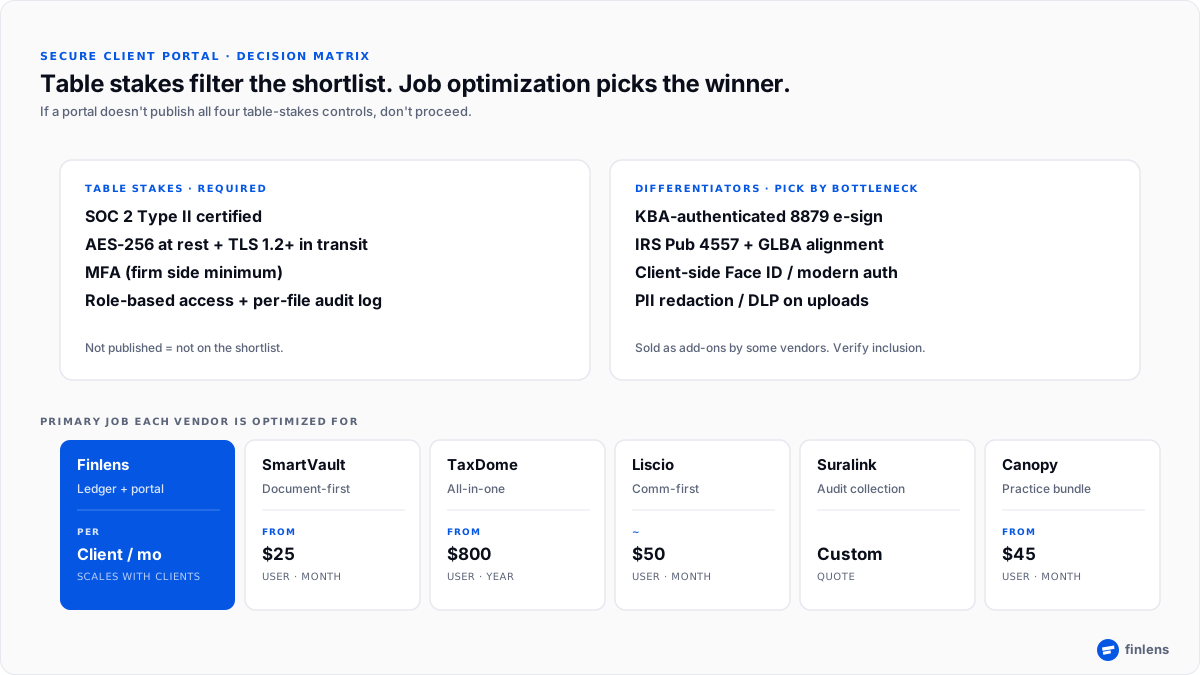
Figure 1. Table stakes filter your shortlist; secondary-job optimization picks winner.
Secure client portal software by primary job
Every vendor below meets base compliance bar. What separates them is which secondary job each one is optimized for. Naming that job is where portal buying decisions actually get made.
Finlens ledger layer + secure client-facing surface
Overview: Finlens is AI-native platform built for CPA firms whose secure-portal problem is not just “move documents safely” but also “make sure numbers those documents represent are actually right.” The client-facing surface handles secure file exchange, KBA-authenticated 8879 e-signature, and controlled access to workpapers and statements. The layer underneath handles ledger work Stripe payout decomposition, categorization with human-in-the-loop review, deferred revenue schedules and writes clean entries directly to QuickBooks Online.
Best for: firms running Stripe-heavy, subscription-heavy, or multi-entity clients where “secure portal” conversation is inseparable from “clean underlying books.” One platform instead of two a secure client surface + a ledger tool with shared per-client memory.
Security posture: SOC 2 Type II compliant, encryption at rest and in transit, MFA on firm side and on client access, role-based access controls with per-file audit logs, IRS Pub 4557 and Gramm-Leach-Bliley alignment, KBA-authenticated 8879 e-signature.
Pricing: per client, per month pricing model matches how firms actually deliver bookkeeping and advisory services, rather than per-seat pricing that punishes team growth.
Where it fits: natural first choice for firms that are re-evaluating both their portal AND their bookkeeping delivery model at same time. Full platform overview at finlens.app/accountants.
SmartVault document-first
Overview: SmartVault positions itself as a client portal built around document management. The core surface is folder structures, permissioning, and integration with QuickBooks and tax software; portal is client-facing layer on top of document repository (smartvault.com).
Best for: firms whose bottleneck is “we have documents scattered across email, drive, and old file-shares we need one document system with a client portal on top.”
Security posture: SOC 2 Type II compliant, enterprise-grade encryption, two-factor authentication, and full audit trails per SmartVault’s own site.
Pricing: from ~$25/user/month per public references.
TaxDome all-in-one
Overview: TaxDome is a bundled platform CRM, workflow automation, document management, client portal, e-signature, secure messaging, and billing on one contract. The portal is one of several client-facing modules, not anchor.
Best for: firms that don’t want to run separate CRM, workflow, and portal contracts and are willing to accept some depth-per-module in exchange for a single vendor.
Security posture: SOC 2 Type II compliant, encryption at rest and in transit, MFA, KBA-authenticated 8879 e-sign per third-party portal reviews.
Pricing: from ~$800/user/year on annual billing.
Liscio communication-first
Overview: Liscio is a portal built around secure client communication. Face ID login for clients, two-way texting inside portal, and email sync that centralizes client threads in one place are differentiators.
Best for: firms whose portal problem is not “clients can’t find documents” but “clients don’t respond, or they respond through insecure channels.” Face ID for client login is a real adoption unlock client friction on portals is a bigger churn driver than security debate.
Security posture: SOC 2 Type II, encryption, MFA including client-side Face ID.
Pricing: ~$50/user/month per public references.
Suralink audit-collection-first
Overview: Suralink is optimized for audit engagements request-list (PBC) management, document collection, and status tracking during audit fieldwork. Historically strong with mid-market audit firms.
Best for: firms with a meaningful audit or attest practice where PBC collection is primary portal use case. For tax-only or advisory-only firms, Suralink’s specialization is over-scoped.
Security posture: SOC 2 Type II, encryption, MFA.
Pricing: custom quote by firm size and engagement volume.
Canopy practice-bundle
Overview: Canopy is a modular practice management platform where portal is one of several modules. Firms can start with workflow or time tracking and add portal module later.
Best for: firms that want option to grow into a practice-bundle without switching vendors, and whose bottleneck is not portal-specific.
Security posture: SOC 2 Type II, encryption, MFA, KBA-authenticated 8879 e-sign.
Pricing: from ~$45/user/month per public references modular pricing means effective cost depends on which modules firm activates.
Which secure client portal should CPA firms pick decision framework
Use primary bottleneck to pick, not vendor marketing depth.
- If bottleneck is “we need a secure client surface AND clean underlying books on same platform” → Finlens. One platform for client-facing document flow and underlying QBO ledger cleanup best fit for firms whose Stripe or subscription clients are creating both a portal problem and a categorization problem.
- If bottleneck is “documents are scattered across email, drive, and old file-shares” → SmartVault.Document-first design with portal as client surface.
- If bottleneck is “we run 3 different tools for CRM, workflow, and portal and they don’t talk” → TaxDome. One contract, one login, one data model.
- If bottleneck is “clients don’t use portal, they text or email us instead” → Liscio. Communication-first design with Face ID and in-portal texting is built for adoption problem, not security problem.
- If bottleneck is “PBC requests during audit fieldwork are a mess” → Suralink. Audit-collection specialty is worth specialization cost.
- If bottleneck is “we want a portal now and workflow later on same vendor” → Canopy. Modular pricing lets firm start small.
- If bottleneck is “QBO ledger is dirty before portal ever surfaces a workpaper” → portal is not fix.
- If bottleneck is “clients still refuse portal and send everything by email” → see accounting client portal vs email and spreadsheets when to switch.
Where each portal doesn’t fit honest scoping
- SmartVault is documents-first; firms whose primary bottleneck is CRM or workflow, not documents, will use ~30% of platform.
- TaxDome’s all-in-one design means depth-per-module is not always deepest available; firms that need best-in-class workflow AND best-in-class portal separately may prefer two specialized tools.
- Liscio is communication-first; firms that need heavy document management as primary surface may find folder structure lighter than SmartVault’s.
- Suralink is optimized for audit; tax-only and advisory-only firms are over-scoped.
- Canopy’s modular pricing can grow past a specialized single-purpose portal once 3–4 modules are active model total.
- None of these portals clean underlying QuickBooks Online ledger. A portal secures document exchange; ledger cleanup Stripe payouts, categorization, deferred revenue is upstream and unrelated to portal choice.
Where Finlens fits in secure-portal stack
Finlens is not a client portal. Firms already running Karbon, TaxDome, SmartVault, Liscio, Suralink, or Canopy for client-facing document exchange don’t replace those tools with Finlens.
Finlens sits under portal, at ledger layer:
- Stripe payout decomposition. Payouts arrive as one deposit; Finlens splits each into individual charges, refunds, fees, and disputes before those hit QBO.
- Categorization with human-in-the-loop review. Confidence-scored categorization, bulk-approve queue for routine transactions, flagged queue for ambiguous ones. Rules and Learning history keep per-client memory so decisions don’t get made twice.
- Deferred revenue schedules. Automated for subscription books, so revenue-recognition line portal ends up surfacing on a statement is right.
- Writes clean journal entries directly to QuickBooks Online. The portal then surfaces workpapers, financial statements, and returns built on a book that’s actually ready.
The portal secures how documents move between firm and client. Finlens secures whether numbers those documents reflect are correct in first place. Related: best workpaper preparation software for accounting firms covers workpaper layer downstream of portal.
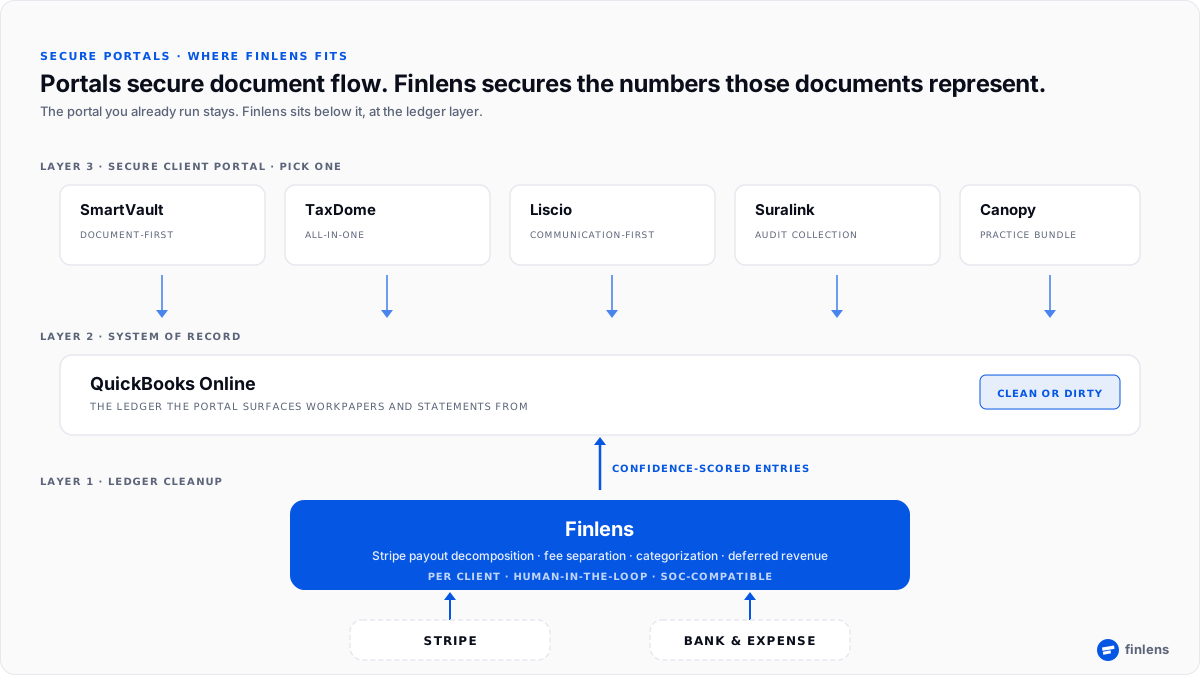
Figure 2. Portals secure document flow. Finlens secures whether numbers those documents represent are actually right.
Conclusion
Pick one client whose portal adoption is stuck and bring last three months of their QBO we’ll show you ledger that portal is surfacing before we say a word about portal itself.
Frequently asked questions
What makes a client portal for accountants “secure”?
At minimum: SOC 2 Type II certification (Type II, not Type I), AES-256 encryption at rest, TLS 1.2+ in transit, multi-factor authentication, role-based access controls, and a per-file audit log. Portals that don’t publish all six on their trust page should not make shortlist.
Is SOC 2 Type II same as SOC 2 Type I?
No. SOC 2 Type I attests that a vendor’s controls are designed correctly at a point in time. SOC 2 Type II attests that those controls operated effectively over a review period, typically 6–12 months. Only Type II is meaningful for portal procurement.
Do secure client portals for accountants support KBA-authenticated 8879 e-signatures?
Most of leading portals do SmartVault, TaxDome, and Canopy publish KBA-authenticated 8879 e-sign in their feature lists. Some vendors sell KBA as an add-on module or via a third-party integration. Verify per vendor before signing.
Which secure client portal is best for CPA firms in 2026?
There is no single winner. SmartVault is best for document-first firms, TaxDome for firms that want an all-in-one contract, Liscio for firms whose bottleneck is client adoption of portal, Suralink for audit-heavy firms, Canopy for firms that want portal + practice management on one vendor. Pick by which bottleneck is biggest, not by vendor scale.
How much does a secure client portal for accountants cost in 2026?
Public pricing spans SmartVault at ~$25/user/month, Canopy at ~$45/user/month, Liscio at ~$50/user/month, TaxDome at ~$800/user/year on annual billing, and Suralink at custom quote. Some vendors also charge for client-facing user seats. Verify current pricing with each vendor.
Do secure client portals meet IRS Publication 4557 requirements?
The leading portals publish alignment with IRS Pub 4557 (Safeguarding Taxpayer Data) and Gramm-Leach-Bliley Act. Alignment is not same as certification firm remains responsible for maintaining controls IRS 4557 requires. Portal alignment reduces firm’s own compliance burden but does not eliminate it.
Do I need a separate ledger-cleanup tool if I have a secure portal?
Yes, if client book has Stripe activity, subscription revenue, or transactional cleanup work that takes hours per month. Portals secure how documents move between firm and client; they don’t touch what’s inside QuickBooks Online ledger those documents represent. Firms with Stripe-heavy books typically pair a portal with a ledger-layer tool.
Trademarks referenced in this article (including SmartVault®, TaxDome®, Liscio®, Suralink®, Canopy®, QuickBooks®) are property of their respective owners. Finlens is not affiliated with, endorsed by, or sponsored by any of third-party products discussed. Product capabilities, security certifications, and pricing are based on each vendor’s publicly available documentation as of 2026-07-17 and may have changed. Readers should verify current capabilities and pricing directly with each vendor before purchasing.

