
How to Pay IRS: Every Payment Method Ranked by Cost and Speed


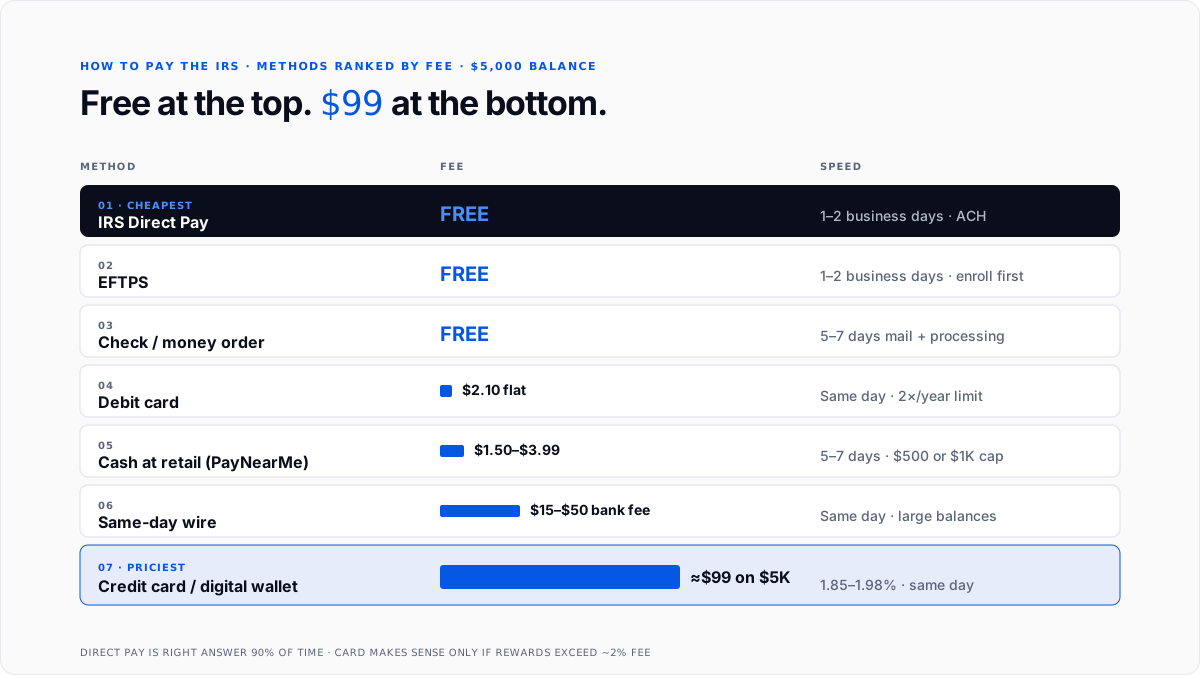
When you owe IRS, seven payment methods are available and cost difference between them ranges from $0 to nearly 2% of your balance. For a $5,000 balance, that's difference between paying $0 or $99 in fees just to send money. This guide ranks every method by fee and speed, so you pick cheapest option that actually clears in time.
The seven payment methods (ranked by fee)
Per IRS Payments page, here are all federal tax payment options with current fees and processing times:
1. IRS Direct Pay free, fastest for most individuals
Fee: $0 Limit: Up to $10,000,000 per transaction Timing: Debits your bank account 1–2 business days Where: directpay.irs.gov
Direct Pay is IRS's own free ACH payment tool. No enrollment required you enter your bank routing and account number, verify your identity via a prior-year return, and schedule payment.
Pros: Free, no enrollment, works up to $10M, easy scheduling up to 365 days ahead.
Cons: Payments can only be canceled up to 2 business days before scheduled date. Bank rejections trigger a $60 dishonored payment penalty.
Best for: Anyone paying federal tax from a personal checking or savings account. This is default recommendation for most filers.
2. EFTPS free, mandatory for businesses over threshold
Fee: $0 Limit: No limit Timing: Debits 1–2 business days; same-day option available for enrolled users Where: eftps.gov
EFTPS (Electronic Federal Tax Payment System) is free federal payment system used by nearly all business filers. Enrollment is required you sign up, receive a PIN in mail, and then set your password online.
Pros: Free, supports all federal tax types (income, employment, excise), robust scheduling, business-tax friendly.
Cons: Enrollment takes 5–7 business days for PIN by mail plan ahead. Interface is dated but functional.
Best for: Small businesses, S-corps, partnerships, and anyone making Form 941 or Form 940 deposits. Also useful for individuals making quarterly estimated tax payments.
3. Check or money order free but slow
Fee: $0 (postage only) Limit: No limit Timing: 5–7 days mail + 2 days IRS processing Requires: Form 1040-V payment voucher
Traditional paper payment. Make check payable to "United States Treasury" (not "IRS") and write on memo line:
- Your Social Security Number (or EIN for business)
- The tax year
- The form number (e.g., "2024 Form 1040")
Attach Form 1040-V voucher and mail to address specified for your state.
Pros: Free, familiar, no online setup required.
Cons: Slow. If you're paying near deadline, USPS delays can cause late-payment penalties even if postmarked on time. Postmark rule generally saves you but is fact-specific.
Best for: Small balances, older filers comfortable with mail, situations where an online transaction isn't possible.
4. Debit card small flat fee, fast
Fee: ~$2.10–$2.50 flat (varies by processor) Limit: Two payments per tax type per year Timing: Same day Where: IRS-approved processors payUSAtax, Pay1040, or ACI Payments
Debit card payments go through third-party processors. The fee is a small flat amount regardless of balance size, so it's cheapest per-dollar for larger balances.
Pros: Same-day confirmation, small flat fee, useful for last-minute deadlines.
Cons: Fee per transaction. Two-payments-per-year cap. Some banks flag IRS payments as suspicious.
Best for: Balances over $500 where you need immediate confirmation.
5. Credit card same-day but pricey
Fee: 1.85–1.98% of balance (varies by processor) Limit: Two payments per tax type per year Timing: Same day Where: payUSAtax, Pay1040, ACI Payments
Credit card payments make sense only when credit card rewards you earn exceed ~2% processor fee. A 2% cash-back card breaks even; a 3% category or a sign-up-bonus opportunity nets ahead.
Pros: Same-day confirmation. Rewards can offset fee. Deferred payment via credit card grace period.
Cons: ~2% fee applies to entire balance. If you can't pay credit card statement, interest at ~24% APR quickly dwarfs anything you saved on IRS interest (currently ~8%).
Best for: Filers optimizing credit card rewards, or filers who need to defer payment via card statement float but only if you can pay card off in full.
6. Same-day wire for last-minute large payments
Fee: $15–$50 (varies by bank) Limit: No IRS limit; may be limited by bank's daily wire cap Timing: Same day Requires: Form 6017 wire transfer worksheet with routing details
If you missed a deadline and need proof of payment same day (typically for large balances tied to a tax notice or collection action), a same-day wire transfer through your bank hits IRS same day.
Pros: Fastest option. No IRS transaction fee (only your bank's wire fee).
Cons: Bank wire fees. Your bank must originate wire before its cutoff (usually 4-5 PM local time). Complicated setup you fill in an IRS-specific worksheet.
Best for: Emergency deadlines, large balances (typically $100K+), taxpayers already familiar with wire transfers.
7. Cash at retail (PayNearMe) for unbanked filers
Fee: $1.50 (up to $500) or $3.99 (up to $1,000) Limit: $500 or $1,000 per transaction; two transactions per day Timing: 5–7 business days for IRS to receive Where: Participating 7-Eleven, Walmart, CVS, Family Dollar, Dollar General locations
Cash-payment option for filers without a bank account. Register online via ACI Payments, receive a barcode, take cash to a participating retailer.
Pros: Enables cash payment without a bank account.
Cons: Low per-transaction limit. Slow (5–7 days). Fees per transaction stack up for large balances.
Best for: Unbanked filers with small balances. Most other filers should use Direct Pay instead.
Free tools ALWAYS beat card processing for balances under $5K
Simple math for a $5,000 balance:
- Direct Pay: $0
- EFTPS: $0
- Debit card: ~$2
- Credit card: ~$99 (1.98%)
Even a 3% cash-back rewards card only nets $51 on $5,000, minus $99 fee = net cost. Credit card pays off only at higher rewards rates or with a strategic sign-up bonus play.
For any balance over $500, if you have a bank account, use Direct Pay. It's correct answer 90% of time.
Deadline mechanics same-day payments
The IRS considers a payment "on time" if:
- Direct Pay / EFTPS: Initiated by 11:45 PM ET on deadline date (though banks may cut off earlier)
- Debit / credit / digital wallet: Processed by 11:59 PM local time on deadline
- Wire transfer: Initiated and confirmed with IRS by end of business
- Check by mail: Postmarked on or before deadline
- Cash at retail: Delivered by deadline (which typically means paying 5–7 days early)
Missing a deadline triggers Failure-to-Pay penalty (0.5% per month) plus interest (currently ~8% APR federally). See our IRS payment plan guide if you can't pay in full.
What to do if you can't pay in full
If balance is more than you can pay by deadline, you have several options:
1. Pay what you can + request a payment plan: Always pay as much as possible on deadline (reducing base that penalties/interest accrue on), then file Form 9465 for an installment agreement. See our IRS payment plan guide.
2. Short-term extension (up to 180 days): Free to set up if you owe less than $100K combined. Interest still accrues.
3. Offer in Compromise: Settle for less than owed if you legitimately can't pay within collection statute.
4. Currently Not Collectible: Temporary halt of collection while you're in genuine financial hardship. Not a discharge you still owe, but collection actions pause.
Common payment mistakes
Making check out to "IRS" instead of "United States Treasury." : Banks may reject or delay processing. Always use "United States Treasury."
Missing SSN + tax year + form number on check memo: Payments without this info sit in a suspense account for weeks while IRS matches them manually. Include all three every time.
Waiting until day-of to enroll in EFTPS: Enrollment takes 5–7 business days for PIN delivery. Plan ahead enroll now even if you don't need to pay yet.
Paying by credit card when balance is under $500: The ~$10 processing fee is likely more than any rewards. Use Direct Pay.
Not scheduling quarterly estimated payments in advance: Direct Pay lets you schedule up to 365 days ahead. Quarterly estimated tax deadlines can all be scheduled in January for whole year.
Sending a wire without IRS worksheet: IRS-specific wire instructions require Form 6017 or equivalent field entries. A generic wire without proper account/tax-period info may not credit correctly.
Paying state tax to IRS by mistake: IRS is federal only. Every state has its own department of revenue and payment portal. Cross-state payments require refund processing (weeks).
Conclusion
For 90% of taxpayers, IRS Direct Pay is correct answer. Free, fast, works up to $10M, no enrollment. Reserve credit card payments for strategic rewards optimization, and use EFTPS if you're a business filer or making regular quarterly estimates. Payments are only half the cycle - when the balance runs the other way, the question becomes how long an IRS refund takes and what pushes a return into manual review.
Frequently asked questions
Which payment method is fastest?
Same-day wire is fastest (same-day), followed by debit/credit card (same-day online). Direct Pay and EFTPS are 1–2 business days.
Can I pay quarterly estimated tax with Direct Pay?
Yes. Direct Pay is recommended free option for quarterly payments.
Is IRS Direct Pay safe?
Yes. It's IRS's own tool; no third party sees your bank info. However, phishing sites imitate directpay.irs.gov always type URL manually rather than clicking email links.
Can I pay with a foreign bank account?
Direct Pay and EFTPS require US bank accounts. Foreign filers use wire transfer via US correspondent banks.
What's maximum I can pay in one transaction?
Direct Pay: $10M. Credit/debit: no IRS limit but processor limits vary. Wire: your bank's limit.
How do I know IRS received my payment?
Direct Pay and EFTPS both provide confirmation numbers immediately. Card processors send email receipts. For checks, wait 2–3 weeks then check your IRS account online.
Can I cancel a scheduled Direct Pay?
Yes, up to 2 business days before scheduled date via confirmation link in your original email.
Do I get a rewards card benefit for IRS credit card payments?
Yes, most cards treat IRS payments as regular purchases. Check your card's terms some exclude "tax payments" from rewards.

